What Cherai is, and where exactly
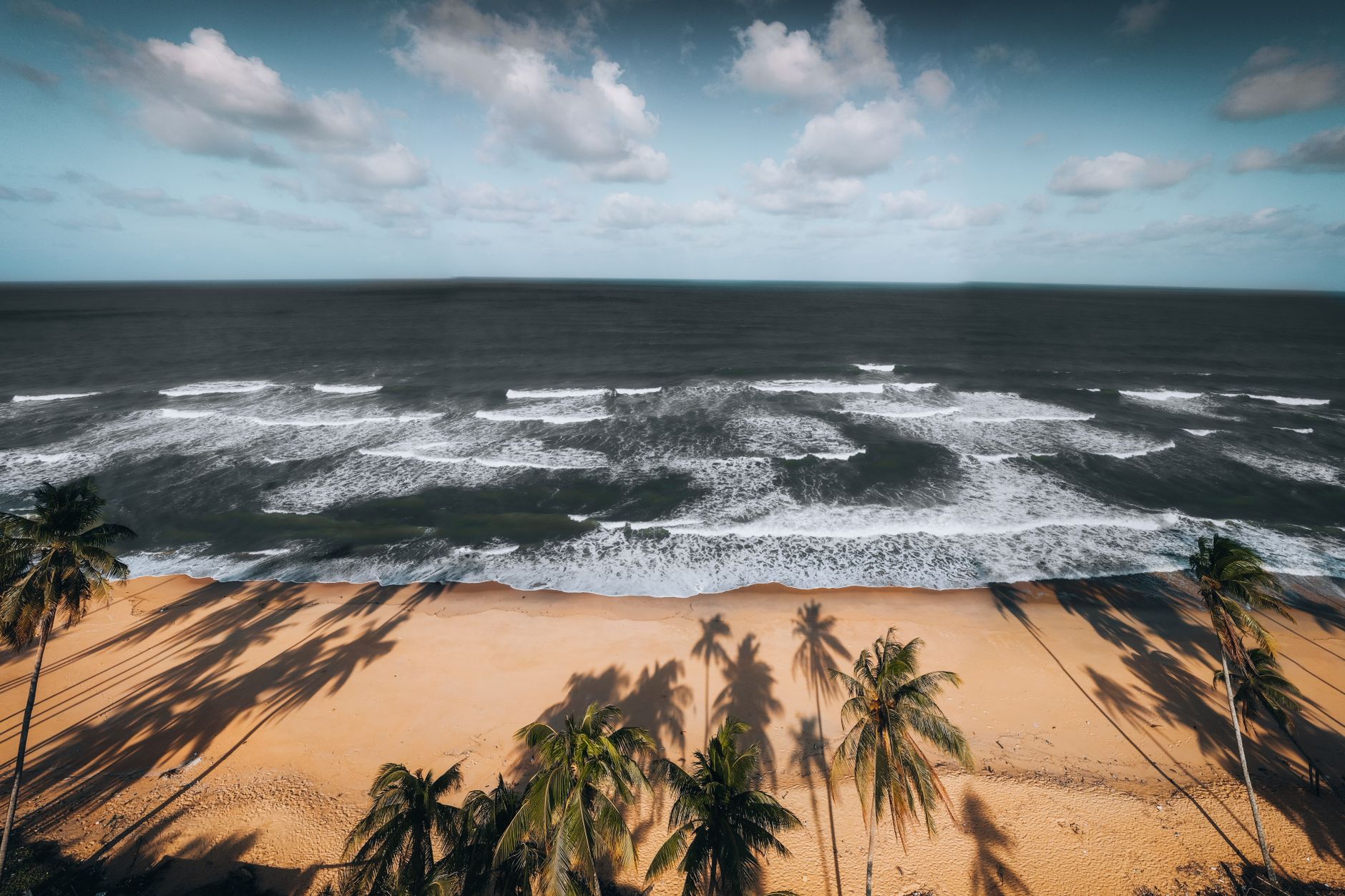
Cherai sits at the northern end of Vypin island, about thirty kilometres from central Ernakulam by road across the Goshree bridges — an hour to an hour and a quarter depending on traffic through Edappally and the island road. The beach runs for roughly ten kilometres of firm, gently shelving sand, backed for most of its length by a coconut fringe and, immediately behind that, a backwater channel. The strip of land between sea and lagoon is in places only a few hundred metres wide, which is why so many properties can honestly claim water on both sides.
The village behind the beach is a working one: the Gowreeswara temple with its annual festival, fishing families, prawn farms, small shops. Munambam harbour, where the trawlers land, is about five kilometres north at the island's tip. Kuzhupilly, a quieter beach with almost no development, is a few kilometres south. That combination — a genuine beach, an unhurried village and backwater within a five-minute walk — is what separates Cherai from the rest of the Kochi coastline.
Who should book here
Anyone who wants beach days as a proper component of a Kerala trip rather than an afternoon excursion. Families with children, because the water is shallow a long way out on calm days and the sand is wide enough for cricket. Couples who want two or three slow nights with a pool, sunset and grilled fish. And travellers heading north afterwards towards Thrissur or Guruvayur, since Cherai sits neatly on that side of the city.
It also works for anyone who has already done Fort Kochi and wants to decompress before flying home. The airport at Nedumbassery is about thirty-five to forty kilometres away, roughly an hour by road, which makes Cherai a plausible last-night stop in a way that Fort Kochi, an hour and a half out, is not. Two nights here at the end of a hill-and-backwater itinerary reads much better than two more nights in a city hotel.
Who should stay away
Day-trippers and sightseers with a full Kochi list. From Cherai, Fort Kochi is around twenty-five to thirty kilometres down the island road and a good hour, Mattancherry a little more; there is no metro, no ferry shortcut, and the buses are slow. If your itinerary is museums, synagogues and spice warehouses, sleep in the old town and come to Cherai for a day.
Also stay away in the deep monsoon if a beach holiday is the point. From June through August the sea is rough, red flags go up, swimming is often prohibited outright and the sand narrows. The rain itself is spectacular and the rates fall by a third or more, so there is a case for a monsoon booking — just not the case that involves lying on the sand. Sun-seekers should target November to March, when mornings are clear and the sea is calm.
What a night costs, by type
Village homestays a few hundred metres back from the sand start at ₹1,500 to ₹2,500 with breakfast, usually a room or two in a family house with a garden and a scooter for hire. Mid-market beach-facing guesthouses and small hotels run ₹3,000 to ₹5,000, often with a modest pool and a restaurant. The larger resorts, several of which sit on the strip between beach and backwater with a pool on one side and a jetty on the other, run ₹5,500 to ₹9,000 for a garden or pool-view room and higher for a sea-facing suite in December.
That makes Cherai broadly comparable with Fort Kochi's heritage tier at the top and considerably cheaper at the bottom. High season is mid-December to mid-January, when the resorts sell out and prices rise thirty to fifty per cent, with a second surge around Easter and the local school holidays in April and May. Monsoon rates from June to August are the year's cheapest. Book direct for the small places, which often quote better rates by phone.
Beach side or backwater side
This is the decision that matters, and the road through Cherai runs neatly between the two. Beach-side properties give you sand within a minute's walk, sunset from your own terrace, sea breeze that keeps rooms cooler, and the sound of surf at night. The trade-offs are salt corrosion on everything metal, occasional crowds on Sunday afternoons when day visitors arrive from the city, and the fact that when the sea is closed in monsoon, you are staring at something you cannot use.
Backwater-side properties are calmer, greener and usually cheaper by ₹500 to ₹1,500 for equivalent quality. You get canoes and small boats from a jetty, kingfishers and cormorants at dawn, and a shorter walk to the village shops. You also get more mosquitoes at dusk, and a five- to ten-minute walk across the road to the sand. For a two-night stay in season, take the beach side. For a week, or for anyone travelling in monsoon, take the backwater and spend the difference on food.
Eating, swimming and filling the days
Food is fish, straightforwardly. Beach shacks and small restaurants along the road grill karimeen, seer fish and squid to order, usually priced by weight from the day's catch, and a plate with rice and a fried side runs ₹250 to ₹450. Resort restaurants charge two to three times that for the same fish with better service. Village tea shops do puttu and beef curry in the morning for under ₹100. Toddy shops in the lanes behind serve fiery fish curry with tapioca; go at lunch rather than at night.
Swimming is good on calm days between November and March, with a gentle shelf and small surf, but there is no continuous lifeguard cover along ten kilometres of sand — swim near other people and near your property, and heed any red flags. Otherwise: hire a bicycle for the backwater lanes, take a canoe through the channels at dawn, walk five kilometres north to Munambam harbour to watch the boats unload around mid-morning, or drive twenty minutes to Pallipuram's small early sixteenth-century Portuguese fort.
The verdict
Book Cherai for two to four nights, at the start or end of a Kerala trip, from November to March, on the beach side of the road, in something at ₹3,000 to ₹5,000 rather than the top tier — the mid-market beach guesthouses here give you ninety per cent of the resort experience for half the price, and the sea is the same sea. Confirm whether your rate includes breakfast and whether the property arranges airport transfers, which typically run ₹1,400 to ₹2,000 each way.
Do not book Cherai as a base for seeing Kochi; the commute will ruin both halves of the trip. Do not book beach-facing in July unless you specifically want to watch a monsoon sea from a dry veranda. And if you want beach and old town in the same stay, the answer is not Cherai — it is two or three nights in Fort Kochi followed by two here, with a one-hour transfer between them and no compromise on either.
Good to know
Questions, answered
How long does it take to reach Cherai from Kochi airport?
About thirty-five to forty kilometres and an hour by road, longer if you hit the Edappally junction at rush hour. Most resorts arrange transfers at roughly ₹1,400 to ₹2,000 each way; app cabs are similar but harder to secure for a return trip from Cherai itself, so pre-book your departure.
Is Cherai beach safe for children to swim?
On calm days between November and March the shelf is gentle and the surf small, which makes it one of the more forgiving beaches near Kochi. There is no continuous lifeguard cover along its full length, so stay near your property, swim where others are swimming and never enter the water when red flags are flying or during the monsoon months.
Can I visit Fort Kochi as a day trip from Cherai?
Yes, but it costs you most of the day. It is twenty-five to thirty kilometres down the island road, around an hour each way by car and longer by bus. A better plan is to split your stay: sleep in the old town for the sightseeing, then transfer north to Cherai for the beach portion.
Is it worth staying at Cherai during the monsoon?
Only if you want the rain rather than the beach. Rates drop by a third or more from June to August, the greenery is spectacular and the sea is dramatic, but swimming is frequently prohibited and beach-facing rooms lose their point. Choose a backwater-side property with a covered veranda and treat it as a reading holiday.
Doing good is the business
Every booking in Kochi removes one tonne of CO₂
Same hotel, same room, same live price you would pay anywhere else — IMPT funds one verified tonne of carbon removal per stay, never added to your bill.