
Kochi sits at sea level on the Malabar coast, and humidity here rarely drops below 70 per cent. Between June and September the southwest monsoon brings steady rain; October to March is drier and slightly cooler, with mornings around 24°C and afternoons near 32°C. Cotton and linen in loose cuts work best. Synthetics trap heat against the skin and stay damp for hours after a short shower, which matters when you are walking the mangrove boardwalk at Mangalavanam or the lanes behind Vasco da Gama Square.
Pack two or three light, quick-drying shirts rather than one heavy piece. Dark colours show sweat less but hold heat; pale colours stay cooler but show rain splashes. A middle choice works well: olive, khaki or stone grey in cotton. If you plan a morning at the Thevara–Perandoor canal path or a walk through Panampilly Nagar's tree-lined avenues, a short-sleeved shirt in cotton-poplin dries in under an hour in the ceiling fan of a Fort Kochi guesthouse.
Kochi's green walks are not uniform. The Mangalavanam Bird Sanctuary path near the High Court is flat, muddy and shaded, and rewards closed shoes; the ground holds water long after rain stops. The Thevara–Perandoor canal walk is paved and better suited to trainers. If you take the 25-minute drive south to the Cherai backwater edges, or the ferry from Ernakulam jetty to Vypin, expect sand, loose gravel and wet grass. A lightweight walking shoe with a shallow tread covers all three without the weight of a hiking boot.
Socks matter more than most travellers expect. Cotton socks hold sweat and cause blisters on a two-hour walk; merino or synthetic blends dry faster. Bring two pairs for a four-day stay. If you plan to combine a walk with a visit to the Paradesi Synagogue or the Kerala Folklore Museum, note that both ask for covered shoulders and knees, so keep a light scarf or long-sleeved shirt in your day bag. That same layer is useful on the air-conditioned KSRTC buses and in most hotel lobbies.
Skip jeans. Denim in Kochi humidity is heavy, slow to dry and uncomfortable by mid-morning. Skip heavy hiking boots unless you are heading on to Munnar or Wayanad after your Kochi stay; they take up luggage space you will want for a rain jacket. Skip black synthetic activewear, which shows every sweat mark and holds odour. If you are walking near the Chinese fishing nets at sunset, a light long-sleeved cotton shirt protects against mosquitoes without adding heat.
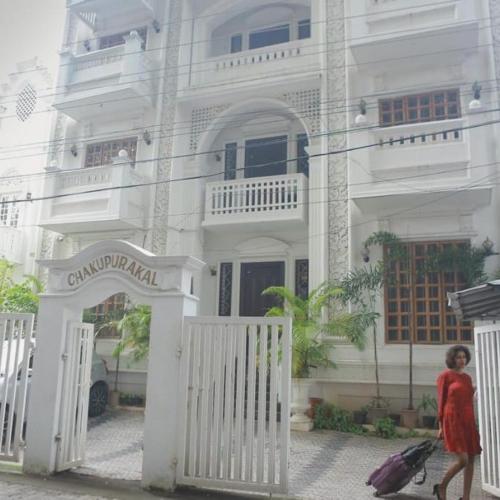
Choose a hotel within walking distance of the areas you came for. Fort Kochi and Mattancherry put the heritage lanes, the Dutch Palace and the waterfront within a 15-minute walk, and mid-range rooms here run noticeably cheaper in the June to August monsoon than in December. Ernakulam suits travellers who want the Marine Drive promenade and easy access to Ernakulam Junction station for day trips. I would book Fort Kochi for a first visit and Ernakulam for a short business or transit stay. Both are well served by the Kochi Metro and the ferry jetty.
Related articles
Where to stay
Hotels in Fort Kochi

Good to know
Questions, answered
What should I pack for Kochi in July?
Light cotton shirts, quick-drying trousers, a compact umbrella and waterproof sandals with grip. July is peak monsoon, with short heavy downpours and flooded lanes around Mattancherry. Skip denim and leather. One breathable rain jacket is worth the space if you plan long walks.
Are shorts acceptable in Kochi?
Shorts are fine on the beach at Cherai and along the Marine Drive promenade, but many temples, the Paradesi Synagogue and the Dutch Palace ask for covered knees and shoulders. Loose cotton trousers or a light skirt are more practical for a day that mixes walking with sightseeing.
What shoes work for the Mangalavanam Bird Sanctuary?
Closed shoes with a shallow tread. The path is flat but muddy and holds water after rain. Trainers are fine; hiking boots are unnecessary weight. Bring a spare pair of socks, since the ground stays damp well into the morning even in the dry season.
How hot does it get in Kochi in December?
December afternoons usually reach around 31–32°C with high humidity, and mornings sit near 24°C. It is one of the drier months, so a light cotton shirt, a cap and sunglasses cover most walks. Evening walks along Marine Drive are comfortable in a t-shirt.
Do I need insect repellent for Kochi's green walks?
Yes, particularly near the backwaters, the mangrove boardwalk and any shaded canal path. Long sleeves at dusk help. Choose a repellent you have used before rather than trying a new one on arrival, and apply it before the sunset walk near the Chinese fishing nets.
Is Fort Kochi or Ernakulam better for a walking trip?
Fort Kochi for heritage lanes, the waterfront and Mattancherry; Ernakulam for the Marine Drive promenade, the metro and easy rail connections. Fort Kochi rooms are cheaper in the monsoon. For a first visit, I would book Fort Kochi and use the ferry for Ernakulam.
How do I get to Cherai Beach from Kochi?
Cherai is roughly 25 kilometres north of Ernakulam, around 45 minutes by road via Vypin, or a ferry across to Vypin followed by a short taxi. Go early; the beach is exposed and hot by midday. Bring sandals for the sand and a light layer for the return.
Can I wash and dry clothes easily in Kochi hotels?
Most hotels offer same-day laundry, but drying is slow in the monsoon. Quick-drying cotton and synthetic blends are more reliable than denim or heavy cotton. A travel clothesline and a couple of dry bags help when you are moving between Fort Kochi and Ernakulam.
Doing good is the business
Every booking in Kochi removes one tonne of CO₂
Same hotel, same room, same live price you would pay anywhere else — IMPT funds one verified tonne of carbon removal per stay, never added to your bill.