The lanes that actually earn the name
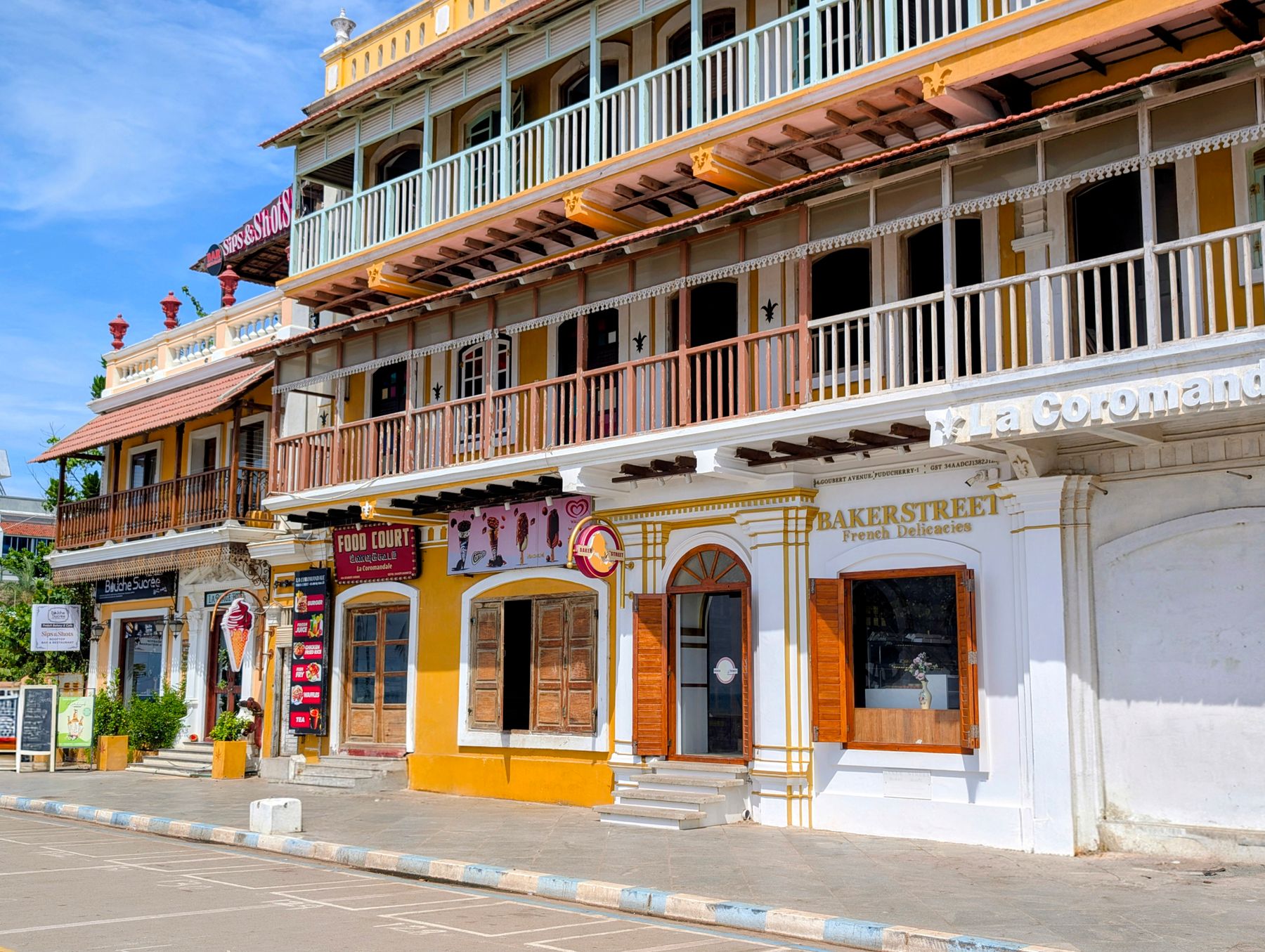
Start at Princess Street, the spine of Fort Kochi's heritage quarter. Most of it runs north-south with buildings close on both sides, so by late morning one pavement sits in shade while the other bakes. The stretch between the Santa Cruz Basilica end and the corner near Vasco da Gama Square takes about six minutes at an easy pace. Early mornings and after 4pm are the pleasant hours; midday the lane empties, which some travellers enjoy and others find flat. Pair it with Bazaar Road, which runs south along the water and catches a steady breeze off the harbour even when the inland streets are still.
Burger Street and Rose Street sit just behind Princess Street and are narrower, with lower traffic and more overhanging walls. The old Dutch Cemetery lane off Convent Road is shadier still, screened by big rain trees, and takes you past the cemetery gate to the waterfront path. None of these are long walks — the whole heritage core fits inside roughly two square kilometres — so plan a loop rather than a single street. The trade-off is real: traffic is light on these lanes but not absent, and pavements appear and vanish without warning.
Calvathy, Fort Kochi beach and the breeze
The beach road near Fort Kochi's fishing nets is where the afternoon breeze is most dependable, because the southwest monsoon wind arrives over open water. From November to February the wind is gentle and the light is good; by March and April the heat builds and the best window narrows to before 9am and after 5pm. The Chinese fishing nets are roughly a ten-minute walk from Princess Street. The sea wall gives you a continuous shaded bench in the early evening, and the open ground in front of it is where local families gather. Expect hawkers; a polite refusal works fine.
Calvathy Road runs north from the beach towards the Dutch Cemetery and the Bishop's House, and it is the one lane in the quarter where you get trees, water glimpses and space in the same walk. Walk it south to north in the morning and you keep the sun behind you. The road is used by scooters and the occasional auto-rickshaw, so keep to the edge. If you want a single walk that shows the quarter at its best, this is the one I would book a morning for.
Getting there, and where to base yourself
Fort Kochi is on the peninsula, about 12km from Ernakulam Junction railway station and roughly 40km from Cochin International Airport at Nedumbassery — allow 45-75 minutes by road depending on traffic on the Ernakulam stretch. From Ernakulam you can take an auto-rickshaw across the bridges or, more pleasantly, the short ferry from Ernakulam Main Jetty to Fort Kochi, which takes about 20 minutes and costs very little. The ferry lands you within a five-minute walk of the heritage lanes, which makes it the better arrival if you are travelling light.
Basing yourself in Fort Kochi rather than Ernakulam changes the trip: you get the lanes before the day-trippers arrive and after they leave. Hotels cluster around Princess Street, Bazaar Road and Calvathy, ranging from simple guesthouses to restored heritage properties, so compare on location first and facilities second. Mattancherry, a short auto-rickshaw ride south, has the spice market on Bazaar Road and the Paradesi Synagogue, but its lanes are busier and hotter — worth a morning, not a base.
What to skip, and when to come
Skip the middle of the day outdoors. Between roughly 11am and 3pm the inland lanes lose their shade and the humidity is at its worst; this is the time for the Indo-Portuguese Museum, the Santa Cruz Basilica interior or a long lunch. Also skip the temptation to walk from Fort Kochi to Mattancherry along the main road — it is a hot, traffic-heavy stretch. Take an auto-rickshaw instead and save your walking for the lanes themselves. Finally, do not expect a continuous promenade: the waterfront path breaks up, and parts of it are used for fishing and boat repair.
The best months for walking are December, January and February, when mornings are genuinely cool and the breeze is steady. June to August brings the southwest monsoon: the lanes are green and almost empty but you will get soaked, and some paths flood. October and November are humid but improving. If your dates are fixed in April or May, walk at first light, rest through the afternoon and go out again after 5pm — the lanes reward that rhythm.
Related articles
Where to stay
Hotels in Fort Kochi


Good to know
Questions, answered
How long does it take to walk Fort Kochi's heritage lanes?
The core loop — Princess Street, Burger Street, Rose Street, Calvathy Road and the beach — is about 3km and takes 1.5 to 2 hours at an unhurried pace, with stops. Add Mattancherry and you need a half day.
What is the best time of day to walk in Fort Kochi?
Before 9am and after 4.30pm. Between about 11am and 3pm the inland lanes lose their shade and humidity peaks; that is the time for museums, churches or a long lunch indoors.
Which months are coolest for walking in Kochi?
December, January and February. Mornings are comfortable and the sea breeze is steady. March to May is hot and humid, and June to August brings heavy monsoon rain that can flood some lanes.
How do I get from Ernakulam to Fort Kochi?
Either by road — about 12km, 25-40 minutes by auto-rickshaw or taxi — or by ferry from Ernakulam Main Jetty, which takes around 20 minutes and lands you a short walk from Princess Street.
Is Fort Kochi walkable from the cruise terminal?
Yes. The cruise terminal is close to the heritage quarter, and Princess Street, the beach and the Chinese fishing nets are all within a 10-20 minute walk, though there is little shade at midday.
Should I stay in Fort Kochi or Ernakulam?
Stay in Fort Kochi if you want to walk the lanes early and late. Ernakulam is better for rail connections and business, but you will spend time crossing to the peninsula each day.
Are the lanes safe to walk at night?
The main heritage lanes are used in the evening and are generally busy with residents and visitors. Stick to lit streets, carry a torch or use your phone, and take an auto-rickshaw for longer hops after dark.
Do I need a guide for the Fort Kochi walk?
No. The quarter is compact and signposted, and the lanes are easy to follow with an offline map. A guide adds context on the Dutch, Portuguese and British layers if you want it, but it is not necessary.
Doing good is the business
Every booking in Kochi removes one tonne of CO₂
Same hotel, same room, same live price you would pay anywhere else — IMPT funds one verified tonne of carbon removal per stay, never added to your bill.