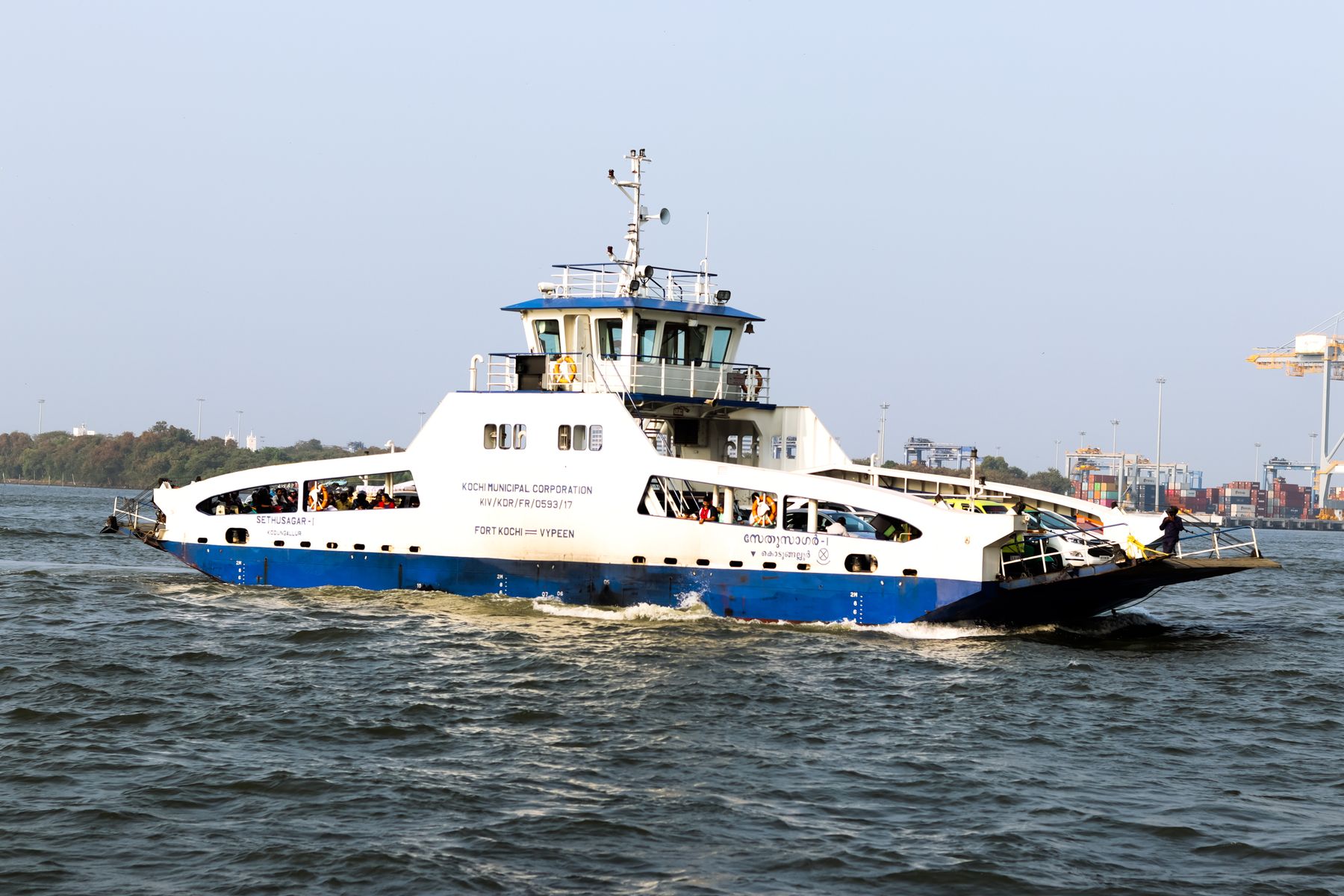
Arrive and move: the airport, the metro and the ferry
Cochin International Airport sits at Nedumbassery, about 45km northeast of Fort Kochi and roughly a 75 to 90 minute drive outside peak traffic. The single biggest cut to your trip's footprint is the one you make on arrival: take the airport shuttle or a shared cab to Aluva, then board the Kochi Metro. The metro runs on the Aluva–Petta line, is air-conditioned, and links Aluva, Edappally, Kaloor and Maharaja's College. From Kaloor or Ernakulam South you can pick up an auto to the ferry jetties. A full metro ride costs a few dozen rupees; a private airport taxi will run into the low thousands. The metro is the better choice unless you land after 10pm with heavy bags.
Once you are in the city, the Kochi Water Metro changed how you cross the harbour. Electric ferries now connect Vyttila, Kakkanad, Vypin (near the container terminal) and Fort Kochi. Fort Kochi is the tourist quarter with the Chinese fishing nets, St Francis Church and the Dutch Cemetery; Mattancherry, 2km south, holds the Paradesi Synagogue and Jew Town's spice shops. Do not try to drive between them in a rented car — parking is scarce and the streets around Princess Street are one-lane. Ride the ferry, walk, or hire a cycle rickshaw for short hops.
Where to stay: choose a walkable neighbourhood
The hotel you book matters more than the lightbulbs in it. Stay in Fort Kochi, Mattancherry or on Willingdon Island if you want the lowest daily transport load. Fort Kochi's guesthouses and boutique heritage properties sit within walking distance of the ferry jetty, the beach and most of the sights; you can spend a whole day on foot and never touch an auto. Erinakulam's MG Road and Marine Drive are better if you need the railway station, the metro and business addresses, but you will rely on autos and the water metro for every Fort Kochi trip. Calvetty and Thevara are convenient mid-points. I would book Fort Kochi for a first visit of three nights or more, and Ernakulam for a one-night stop before a train.
Look for properties with real, verifiable choices: solar water heating, refillable water dispensers instead of single-use bottles, and a stated no-daily-laundry policy. Many heritage homestays in Fort Kochi use filtered water and linen reuse by default because plumbing and power are expensive — this is where a smaller place often outperforms a big chain. Ask before booking: does the hotel run a water refill station, does housekeeping change towels on request, and is the property within a 15-minute walk of a ferry jetty? If the answer to two of three is yes, take it.
Eating, shopping and the backwaters without the diesel
Kerala's food is inherently low-carbon: sadya, appam with stew, puttu and kadala curry, karimeen pollichathu. Eating local cuts food miles and puts money into neighbourhoods. In Fort Kochi, the lanes off Princess Street and Bazaar Road have small kitchens serving breakfast from around 7am; Mattancherry's Gujarati and Jew Town cafés are worth the walk. Skip imported bottled water — carry a steel bottle and refill at your hotel or a restaurant; Kochi's filtered water is fine and a refill habit saves both plastic and money. Avoid the large buffet resorts on the far side of Vypin if you are counting: they add a ferry or bridge crossing to every meal.
For the backwaters, the famous houseboats are a problem. A typical overnight houseboat runs a diesel engine and generator for many hours. Choose instead a small canoe or country-boat day trip from Kumbalangi or the Alappuzha side, or a shared shikara through the Kuttanad canals. The Kochi Water Metro and the State Water Transport Department ferries go to Vypin, Kakkanad and Kumbalangi for a fraction of a private cruise's fuel and cost. If you want the backwater night, pick an operator who poles or uses an electric motor. For day trips, the best months are November to February: dry, cooler, and the ferries run on schedule.
What to skip, and the best months to come
Skip the private air-conditioned car with a driver for the whole week. It is the single largest line in a Kochi trip's emissions and rarely saves time inside the city. Skip single-use plastic bottles, which are still common at roadside stalls. Skip the two-hour sunset cruise from Marine Drive if the boat is a big diesel one; the Marine Drive walkway is free, breezy and lined with local families at dusk. Skip Munnar as a rushed day trip — it is a four-hour drive each way through the hills, and an overnight is far kinder to both you and the place. Use the metro to Edappally for the Lulu Mall area only if you genuinely need it; otherwise the Fort Kochi–Mattancherry loop has enough for three days.
Best months for a low-footprint Kochi trip are November to February, when you can walk and ferry without monsoon downpours and heat. June to August is the southwest monsoon: ferries and backwater boats can be suspended, so plan more indoor time and rely on the metro. March to May is hot and humid; start at 6.30am, rest at midday. Wherever you stay, book directly with a Fort Kochi or Ernakulam property that can confirm refill water, towel reuse and a walkable jetty — that single booking decision does more for your footprint than any offset you can buy later.
Good to know
Questions, answered
Is Kochi easy to see without a car?
Yes. The metro covers Aluva to Petta, the electric water metro links Vyttila, Kakkanad, Vypin and Fort Kochi, and Fort Kochi and Mattancherry are walkable. Autos fill the gaps cheaply. You only need a car for Munnar or far-backwater day trips.
How do I avoid single-use plastic in Kochi?
Carry a steel or filtered bottle and refill at your hotel or at restaurants; most will top you up. Refuse plastic bags at spice shops in Jew Town by bringing a cloth tote. Say no to straws and bottled water at ferries and beaches.
What is the greenest way to see the backwaters near Kochi?
Take a shared small canoe or country boat from Kumbalangi, or use the State Water Transport Department ferries. If you want an overnight, pick a houseboat that poles or uses an electric motor rather than a diesel generator.
Doing good is the business
Every booking in Kochi removes one tonne of CO₂
Same hotel, same room, same live price you would pay anywhere else — IMPT funds one verified tonne of carbon removal per stay, never added to your bill.